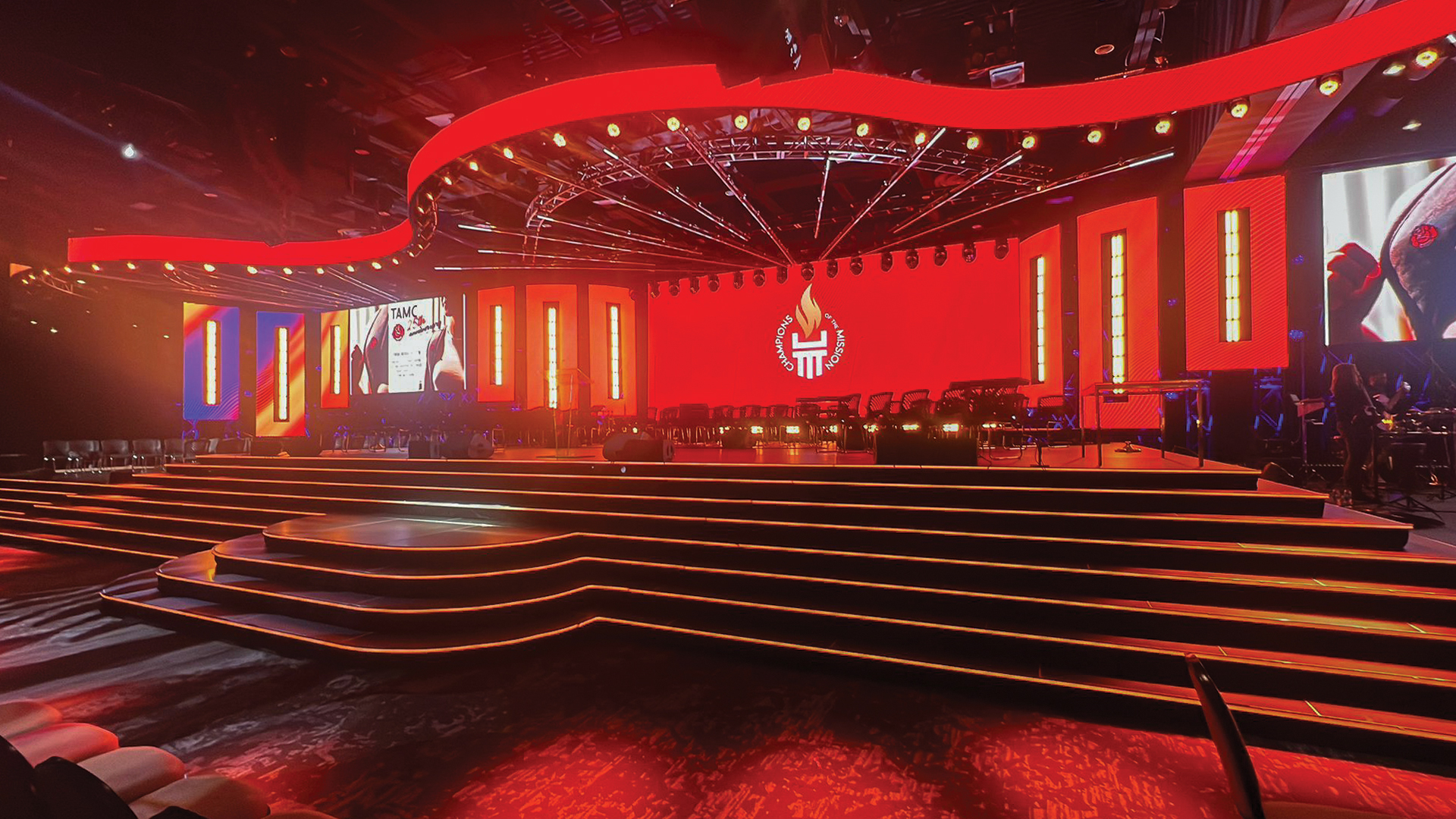
The promise of LED video technology includes seamless imagery that transports audiences into alternate realities. Modern virtual production stages and concert video environments depend on LED panels presenting coherent perspectives that fool the eye into perceiving depth where none exists. When these panels decide to play their own perspective games, the resulting visual distortions create experiences that range from mildly disconcerting to completely reality-breaking.
The Virtual Production Stage That Bent Reality
A film production invested heavily in a purpose-built virtual production volume featuring ROE Visual Black Pearl BP2 panels arranged in a curved configuration designed to maximise the camera frustum. The installation used Brompton Technology Tessera processing with disguise media servers running Unreal Engine environments.
The camera tracking system—powered by Mo-Sys StarTracker—fed position data to the media servers, enabling the virtual environments to shift perspective in real-time, creating the illusion that cameras were moving through three-dimensional spaces. During initial testing, this system performed beautifully.
Production day revealed unexpected behavior. As actors moved across the stage, the LED wall’s perspective shifted correctly for the main camera but created visible distortions for off-axis observers. More problematic, certain panel groups developed subtle timing offsets that caused different sections of the virtual environment to update at different moments. The resulting effect resembled reality tearing at the seams—different sections of what should be unified imagery updating fractionally out of sync.
The Technical Foundations of LED Perspective
LED video walls create perspective illusions through careful content rendering that accounts for viewer position. In traditional installations, this calculation assumes a single optimal viewing position—typically the front-of-house camera position or centre audience. Virtual production stages complicate this by requiring dynamic perspective adjustments based on moving camera positions.
The development of virtual production technology accelerated following the success of Industrial Light & Magic’s StageCraft volumes used on The Mandalorian. These installations demonstrated that LED walls could replace green screen workflows, providing actors with environmental context while capturing final pixels in-camera. The technology requires extraordinary precision in latency management, color accuracy, and pixel-perfect alignment.
The Concert Tour’s Depth Perception Disaster
A major touring production featured a massive upstage LED video wall displaying content designed to create the illusion of infinite depth behind the performers. The video content featured tunnels, cityscapes, and abstract environments rendered with careful attention to parallax effects that would sell the depth illusion from audience positions.
The design worked perfectly in arenas where the wall could be positioned at consistent distances from audiences. A festival deployment, however, placed the same content at a significantly different throw distance. The carefully calibrated perspective rendering now appeared wrong—tunnels seemed to bulge outward rather than recede, cityscapes bent in unexpected directions, and the overall effect created mild nausea among observers in certain seating areas.
The media server operator attempted real-time adjustments using the Notch rendering engine integrated with their disguise gx 2c servers. Some content could be modified on the fly; other pieces required fundamental re-rendering that couldn’t happen during a live performance. The tour subsequently developed multiple content versions optimised for different venue configurations.
Understanding Viewing Angle Effects
LED panels exhibit viewing angle dependencies that affect both brightness and color accuracy. Most panels specify horizontal and vertical viewing angles where performance remains within acceptable parameters. Beyond these angles, color shift and brightness falloff become noticeable and potentially problematic.
Curved installations compound these challenges. Panels at the edges of curved walls face audiences at oblique angles even when those audiences occupy central positions. Content designed for viewers positioned perpendicular to the panels requires adjustment for actual viewing geometries. Curved LED processors from Brompton and NovaStar include features addressing these geometric challenges, but proper configuration requires accurate measurement and careful calibration.
The Broadcast Studio’s Perspective Paradox
A network news studio deployed an ambitious curved LED installation featuring Leyard TVH Series panels wrapped around the anchor desk in a configuration designed to immerse on-camera talent in dynamic virtual environments. The design promised flexibility impossible with traditional scenic elements—the ability to transform the studio’s appearance instantly for different programmes.
Camera testing revealed an uncomfortable reality. Content that appeared correctly from the main anchor camera position became distorted when viewed from cameras positioned for two-shots or interview setups. The LED wall couldn’t serve multiple camera perspectives simultaneously without some cameras capturing obviously incorrect imagery.
The production team implemented a complex multi-camera workflow where content updated dynamically based on which camera was currently on-air. Ross Video Voyager integration enabled the Vizrt graphics system to receive camera tally information, triggering content changes synchronised with camera switches. The solution worked, but required constant attention from technical directors managing both switching and content coordination.
Calibration and Consistency Challenges
Maintaining visual consistency across large LED installations requires meticulous calibration. Individual panels age differently, with LED phosphors degrading at rates influenced by usage patterns and environmental factors. A panel used primarily for bright white content ages faster than one displaying predominantly dark content.
Professional calibration systems from Portrait Displays, ColourSpace, and Brompton’s Hydra enable regular recalibration that maintains panel matching. The Brompton Tessera processing platform includes dynamic calibration features that can adjust in real-time based on sensor feedback, though such sophisticated approaches require significant technical investment.
The Awards Show’s Dimensional Confusion
A televised awards ceremony featured an innovative stage design incorporating multiple LED surfaces at varying depths—floor panels, upstage walls, overhead soffits, and side columns all displaying coordinated content. The content designers created environments that spanned these surfaces, using projection mapping techniques applied to LED rather than projected imagery.
Technical rehearsals proceeded smoothly from the programme cut camera position. Live broadcast revealed perspective problems invisible from that single viewpoint. The floor cameras capturing audience reactions simultaneously captured the LED floor panels—which displayed content rendered for overhead camera perspectives, creating jarring visual discontinuities in cutaway shots.
The technical director quickly learned to avoid certain camera positions during content-heavy moments. Post-production discussions led to revised content strategies for subsequent broadcasts—either simplified content that worked from multiple perspectives or careful camera blocking that kept problematic angles off-air.
Best Practices for Perspective Management
Managing LED perspective challenges requires integration across content creation, system design, and camera operations. Content creators must understand how their work will be displayed—the physical geometry of the LED installation, the expected camera positions, and the viewing angles for live audiences.
Pre-visualisation using tools like Vectorworks, Depence, and disguise Designer enables testing of content across different viewing positions before physical installation. These virtual environments allow creative teams to identify perspective problems early, when modifications remain relatively simple and inexpensive.
The LED panels that play with perspective remind us that video technology creates illusions subject to geometric realities that content alone cannot overcome. The most successful installations acknowledge these limitations during design phases, developing content strategies and operational workflows that work within physical constraints. When LED panels are treated as magical surfaces that will display anything correctly from any angle, perspective problems become inevitable surprises. When they’re respected as precision instruments with defined operating parameters, these same panels deliver the seamless imagery that makes modern visual production possible.
