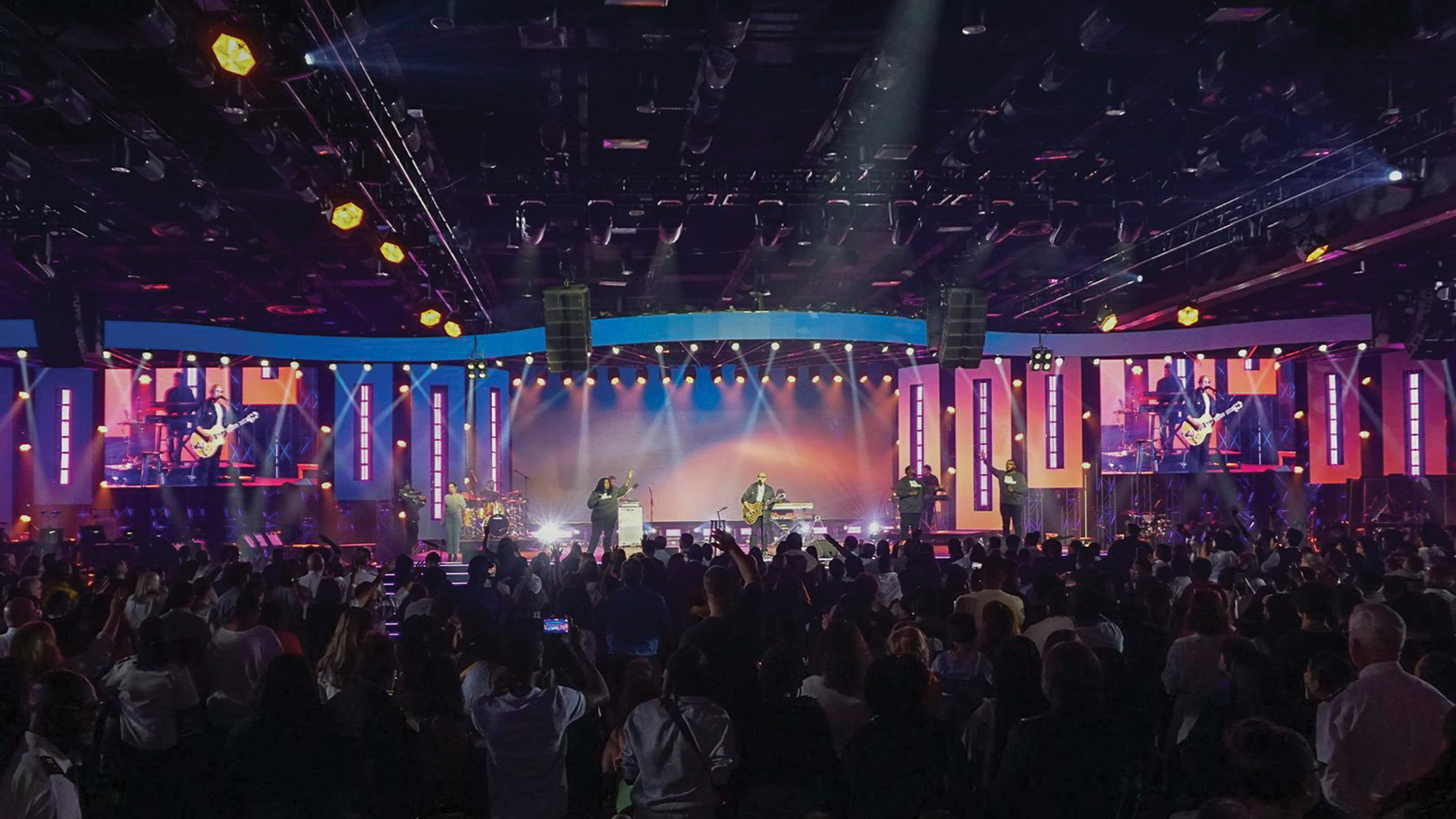
The LED video wall) that once served corporate events as a glorified presentation screen has undergone a fundamental identity transformation. Today’s most innovative corporate productions treat LED surfaces) as interactive, responsive stage elements — surfaces that react to presenter movement, audience participation, real-time data, and live generative content. This evolution, driven by advances in real-time rendering technology), interactive sensing systems), and the creative ambition of a new generation of corporate event designers, is redefining the visual vocabulary of high-end corporate entertainment.
The Technology Stack: What Enables Interactivity
Interactive LED wall applications rest on a technology stack that integrates multiple systems in real time. At the content generation layer, Unreal Engine 5) and TouchDesigner) have emerged as the dominant platforms for creating real-time responsive visual content — both capable of rendering complex, resolution-independent content at frame rates sufficient for broadcast-quality LED wall playback. Disguise d3 media servers) and Green Hippo Hippotizer Taiga+) serve as the bridge between content generation software and LED wall hardware, managing output mapping, synchronisation, and the multiple-output streams that complex interactive configurations require.
The input layer — how the system understands what is happening on stage and translates it into content responses — involves a range of sensing technologies. Microsoft Azure Kinect) and Intel RealSense depth cameras) track presenter body position and movement in three dimensions. Lidar sensors) provide higher precision spatial mapping for applications requiring centimetre-accurate position data. IR tracking systems) from companies including BlackTrax) provide performer position data with sub-centimetre accuracy for the most demanding interactive choreography applications. Each sensing modality feeds position and motion data into TouchDesigner) or the Disguise REMI integration layer, which translates spatial data into content modulation parameters.
Case Study: The Data-Driven LED Wall
One of the most commercially significant corporate applications of interactive LED technology is the real-time data visualisation wall) — deployed for product launches, investor presentations, and annual conferences where live data feeds) from business intelligence platforms are visualised in real time on the event stage. Companies including IBM), Salesforce), and Microsoft) have deployed these systems at their flagship conference events, connecting Tableau), Power BI), or custom API data feeds to interactive LED environments that evolve dynamically as presenters discuss the underlying data.
The production workflow for data-driven LED walls) requires close collaboration between corporate IT security teams — who control access to live business data — and event technical production teams who need that data in formats compatible with TouchDesigner or Unreal Engine data ingestion). The OSC (Open Sound Control)) and JSON over WebSocket) protocols have become standard communication interfaces between enterprise data systems and event production technology, creating a defined integration pathway that both IT and production teams understand.
Audience Participation: The Social Media Dimension
The convergence of mobile device usage) and LED wall interactivity) has created a new category of corporate event engagement: audience-driven content displays. Systems using Slido), Mentimeter), or custom-built mobile interaction platforms allow audience members to contribute content — poll responses, word clouds, social media posts, or emoji reactions — that is aggregated and visualised in real time on the stage LED wall. This creates a tangible feedback loop between the stage and the audience that transforms the dynamic of large corporate meetings from passive broadcast to active participation.
The production challenge of audience interaction systems lies in content moderation) and latency management). Unmoderated audience text contributions appearing in real time on a stage LED wall at a major corporate event represent a brand risk that event producers must manage through either automated keyword filtering), human moderation queues), or design approaches that aggregate contributions into formats — word clouds, colour gradients, abstract data representations — that preclude specific text reproduction. The best-executed audience interaction systems balance genuine spontaneity with appropriate content risk management.
AI-Powered Generative LED Content
The integration of AI image and video generation systems) into corporate event LED wall production represents the newest frontier of the interactive discipline. Stable Diffusion) and Runway ML) running in real-time or near-real-time modes can generate image content responding to presenter speech content, audience emotion data, or predefined creative parameters — creating LED wall environments that evolve organically in response to the content of the event itself. Early deployments of these systems at premium corporate conferences have generated significant industry interest, though the technical complexity and content unpredictability of AI-generated visuals requires careful creative direction and technical safeguards before mainstream adoption.
The TouchDesigner-to-Stable Diffusion pipeline), using AUTOMATIC1111) as the image generation backend, is the most commonly implemented architecture for event AI visual applications at present. A skilled operator can establish img2img conditioning loops that guide the AI generation toward aesthetically coherent output while maintaining the responsiveness that makes the interaction meaningful. This is craft work — part programming, part art direction — that requires operators with cross-disciplinary competence spanning media server operation), real-time graphics), and AI image generation workflows
The Future Stage: Where Interactive LED is Headed
The trajectory of interactive LED wall technology) in corporate events points toward increasingly seamless integration between physical and digital spaces. The growth of extended reality (XR) production) — using LED walls as virtual production environments rather than content displays — is moving from entertainment production into corporate communications, enabling remote presenter integration that places digital participants into physically convincing shared spaces. Companies developing these XR stage environments) for corporate use, including Prox Studios), Dimension Studio), and Igloo Vision), are building the next chapter of what an LED wall can be: not a screen, not a backdrop, but an active participant in the event itself.
For corporate clients investing in these technologies, the return is measured not just in production value but in audience engagement depth, social media impact, and the lasting impression of an event experience that could not have happened anywhere else.
