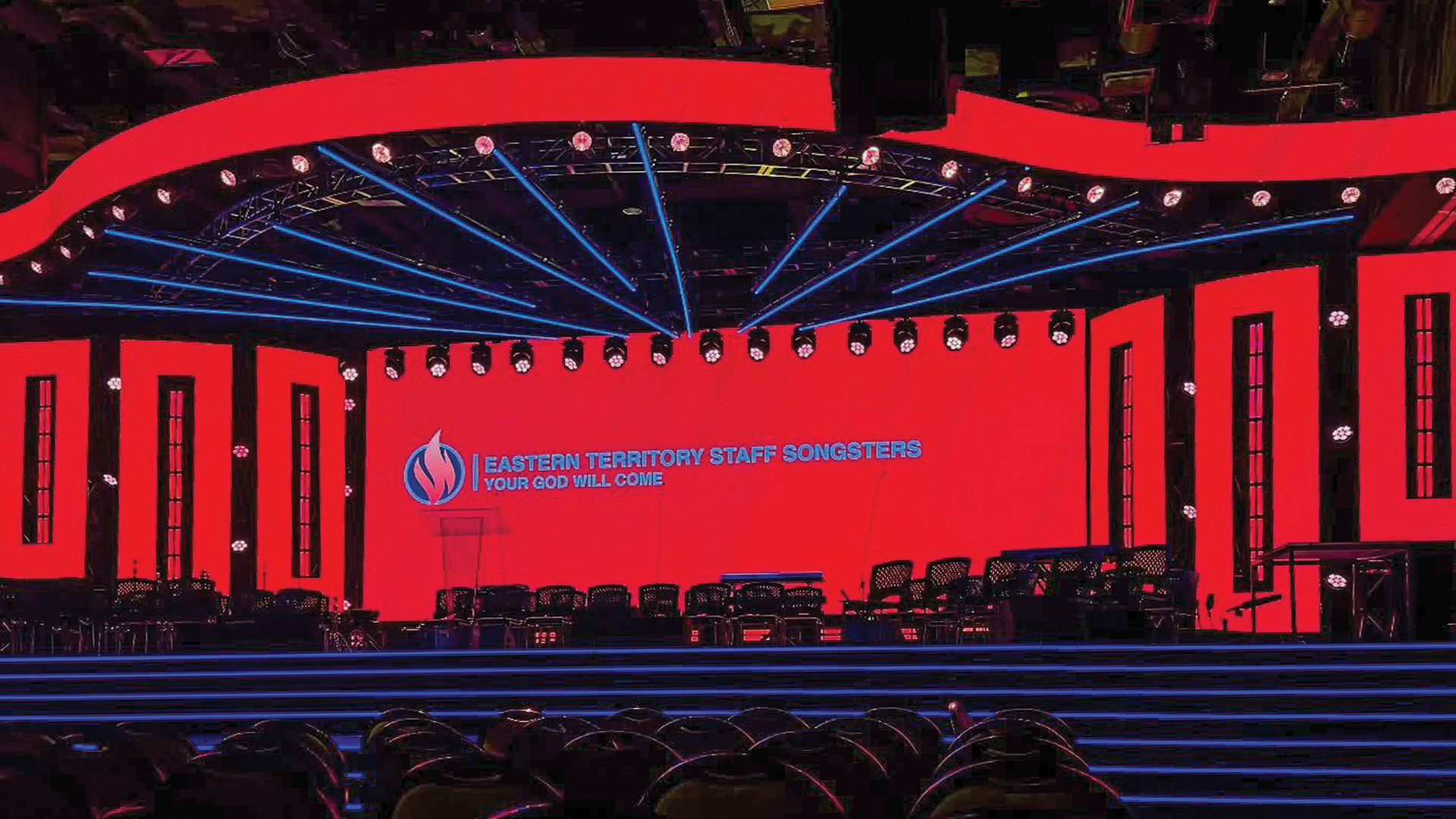
When the lights drop and the crowd surges forward, the visual infrastructure holding a live event together is doing something extraordinary. From intimate club theatres seating 500 to the volcanic energy of 120,000-capacity stadiums, LED wall installations have become the dominant visual language of modern live production. Understanding the engineering philosophy, vendor ecosystems, and deployment realities behind these systems separates elite AV professionals from the rest of the field.
The Architecture of Scale: From 500-Seat Venues to Massive Stadiums
The fundamental challenge of large-scale LED video walls is not brightness — modern pixel pitch technology has largely solved that — it is pixel real estate relative to viewing distance. In a 500-seat performing arts centre, a 3.9mm pixel pitch panel running at 1,500 nits delivers crisp imagery at 6–8 metres. Scale that architecture to a 40,000-seat arena floor and the same spec becomes a blurry smear of light. Vendors like ROE Visual, Absen, and Unilumin engineer modular tile systems specifically calibrated for distance ratios, with outdoor festival configurations demanding 5,000–8,000 nit panels to overcome direct sunlight.
The shift from older tungsten projection to solid-state LED began gaining serious industry traction around 2005–2008, with early adopters in the touring world recognising the weight-to-brightness advantage immediately. What once required multiple high-lumen projectors, careful alignment workflows, and fragile lamp replacements could now be achieved with self-contained LED tile grids requiring far less downtime between shows. By 2012, touring LED walls had become the baseline expectation for any artist grossing above a certain threshold.
Signal Chain and Processing: The Intelligence Behind the Image
The hardware grid is only as good as its signal processing backbone. Industry-standard video processing platforms like Disguise d3 and Green Hippo Hippotizer handle the computational heavy lifting of mapping, blending, and real-time content manipulation across multi-panel configurations. The Disguise gx 2c media server, for example, powers entire stage environments across concurrent outputs while running Notch generative effects in real time — a capability that has become standard on major arena tours.
Controlling the data flow into LED walls at scale requires purpose-built LED video processors. The Novastar MCTRL4K and Brompton Technology Tessera SX40 processors have become industry reference points for colour science accuracy and latency management. Brompton’s Hydra Dynamic Range technology in particular addresses one of live video production’s persistent headaches: reproducing wide-gamut colour faithfully on panels that may be several generations apart in manufacturing date, a critical consideration when rental houses pull from mixed inventory across a touring season.
Structural Realities: Rigging 30+ Tonnes of LED Infrastructure
A full-scale stadium video wall rig for a major touring act can approach 30–40 metric tonnes when accounting for truss systems, power distribution, data infrastructure, and panel hardware. Venue structural analysis — particularly point load calculations — becomes the governing document for entire production designs. Production managers working with TAIT Towers, Stageco, or All Access Staging navigate a precise engineering workflow: venue structural reports, rigging attachment point confirmation, CAD modelling in software like Vectorworks Spotlight, and phased load-in scheduling.
The 2019 introduction of curved and flexible LED tile formats by manufacturers including ROE Visual Carbon CB5 and Roe Visual Black Marble fundamentally changed set design vocabulary. Concave, convex, and cylindrical shapes became achievable without bespoke custom manufacturing, enabling production designers to pursue architectural ambitions previously restricted to large-budget theatrical installations. This flexibility has trickled down to mid-tier touring and corporate event production, where modular LED surfaces now regularly appear in configurations that would have been cost-prohibitive before 2018.
Corporate vs. Concert: Different Demands, Same Infrastructure
The corporate event sector has absorbed LED wall technology aggressively, but with different performance parameters than touring. A 500-seat product launch or global town hall broadcast prioritises colour accuracy for brand assets, seamless integration with disguise or Resolume Arena playback software, and reliable camera-friendly refresh rates. The 3,840 Hz refresh rate capability of panels like the ROE Visual BP2 eliminates rolling shutter artefacts in broadcast — a technical specification that brand managers increasingly require in their AV briefs.
Meanwhile, stadium concert productions prioritise raw brightness, structural flexibility, and the dramatic impact of immersive LED environments. Acts like Beyoncé’s Renaissance World Tour and U2’s Sphere residency pushed the boundaries of what venue-integrated and touring LED video architecture could achieve — not merely as backdrop, but as the defining spatial logic of the entire show experience. These productions consumed hundreds of millions in production budget but permanently redefined audience expectations at every level of the market.
Looking at the Numbers: What Large-Scale Deployments Actually Cost
A 500-capacity venue LED wall installation using 3.9mm indoor panels might represent a capital investment of $80,000–$200,000 depending on panel brand, rigging, processing, and integration. Scale to a 20,000-seat arena touring configuration and the number climbs to $2M–$5M in rental value deployed per show, with full ownership of comparable touring systems representing investments above $10M for top-tier packages. The rental market dominates deployment at scale: companies like VER, PRG, LD Systems, and Solotech maintain enormous LED inventories supporting hundreds of concurrent productions globally.
The Path Forward: MicroLED and Next-Generation Pixel Technology
The frontier of live production display technology is moving rapidly toward MicroLED architectures — tighter pitch, higher brightness density, longer operational lifespan, and dramatically reduced power draw. Samsung and LG have invested billions in MicroLED manufacturing infrastructure, and the downstream effects on professional AV supply chains are already visible in product roadmaps from tier-one panel manufacturers. For production professionals, the transition demands ongoing fluency in evolving HDR workflows, SMPTE 2110 IP video standards, and the expanding capability sets of next-generation media servers.
From 500 seats to 120,000, the LED wall is no longer a production enhancement — it is the production itself. Those who understand its architecture at depth will shape every major live experience of the next decade.
