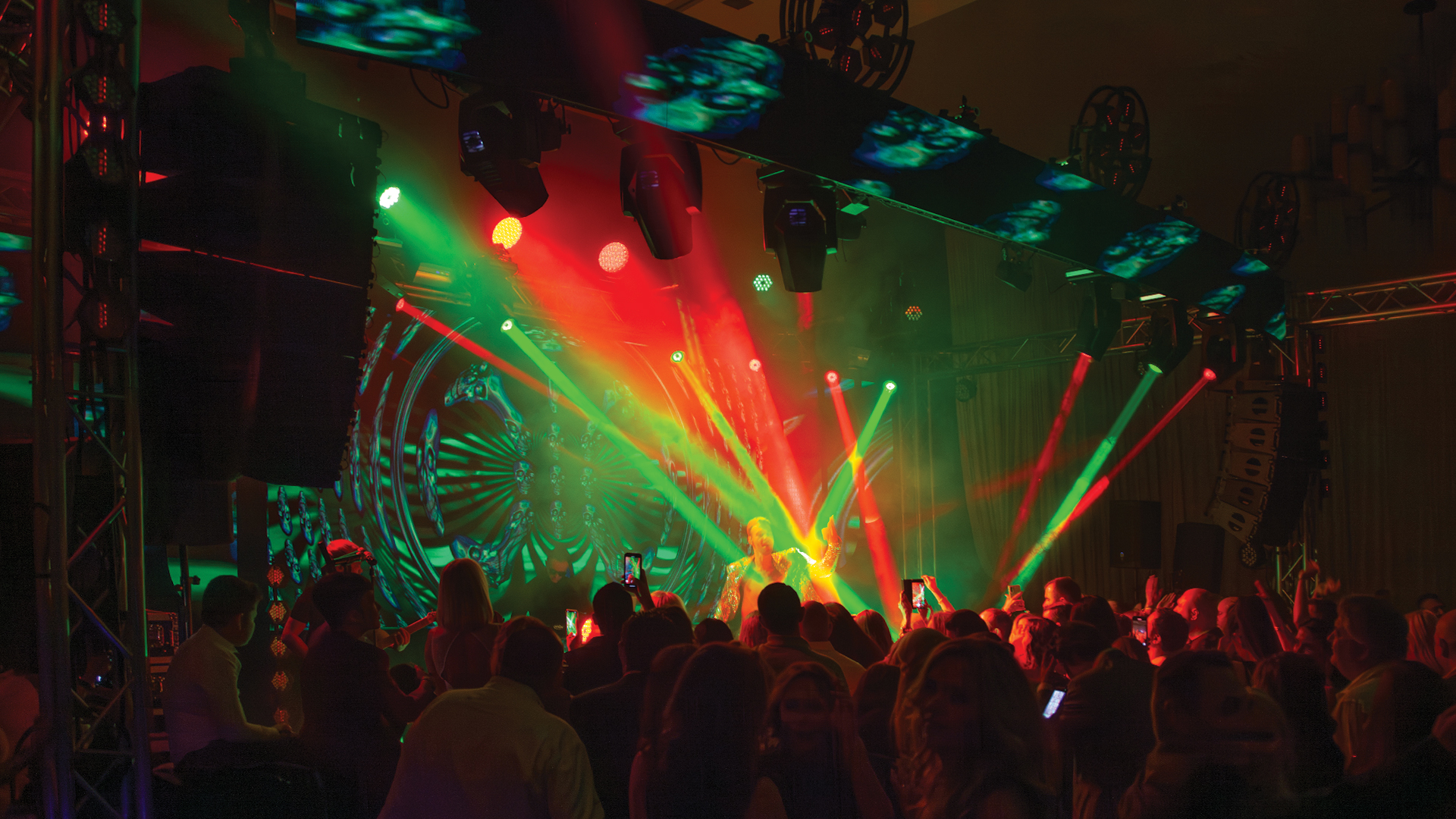
The fundamental purpose of theatrical spotlighting is directing audience attention—illuminating performers while keeping viewers comfortably in shadow. When this arrangement reverses, when spotlights decide the audience deserves illumination more than the stage, the results range from mildly annoying to genuinely dangerous. Follow spots and automated fixtures have demonstrated remarkable talent for finding unintended targets, creating moments that embarrass operators, alarm audiences, and occasionally trigger medical interventions.
The Physics of Misdirection
Understanding how spotlights find wrong targets requires understanding moving light operation. A Robe MegaPointe or Martin MAC Ultra Performance can traverse its entire pan and tilt range in seconds, moving powerful light beams across spaces at velocities that make human reaction impossible. When these fixtures move to incorrect positions—whether from programming errors, encoder failures, or communication faults—the resulting light beams may sweep through audience areas before operators can intervene.
The beam intensity of modern fixtures compounds misdirection impact. A Clay Paky Sharpy Plus produces a concentrated beam that, when viewed directly at close range, can cause temporary vision impairment or trigger photosensitive responses. The same fixture that creates stunning aerial effects at twenty meters becomes potentially harmful when directed at audiences seated five meters away. Misdirection isn’t just aesthetically wrong—it’s potentially dangerous.
Programming Position Errors
The most common source of audience targeting involves position programming errors. Modern lighting control uses numerical pan and tilt values that translate to physical fixture orientation. A programmer who enters 180 degrees instead of 18 degrees sends the fixture to a completely different location. If that location happens to be occupied by audience seating rather than empty stage space, viewers receive illumination nobody intended.
The ETC Eos family consoles display pan and tilt values numerically and through visual position indicators. Careful programmers verify positions before saving cues; rushed programmers sometimes save first and verify later. When verification occurs during technical rehearsal rather than programming sessions, verification happens in front of audiences or performers who experience the error firsthand. The fixture follows its programming precisely—that programming simply doesn’t match the programmer’s intentions.
The Follow Spot Factor
Follow spots operated by humans introduce human error into audience targeting equations. A Robert Juliat Victor or Strong Super Trouper in inexperienced hands can wander across audience sections when operators lose their targets or misunderstand cue calls. The operator who briefly loses sight of a moving performer might pan through the house searching for their target, illuminating audience members along the way.
One Broadway production documented a memorable follow spot misdirection during a complex chase sequence. The operator, attempting to track a performer running across the stage, overshot and continued into the audience. The follow spot beam swept across three rows of orchestra seating before the operator regained control. Audience reactions—shielding eyes, ducking, audible exclamations—created their own theatrical moment that competed with the scripted action. The stage manager’s incident report noted that “the spotlight found more people than the performer had ever met.”
Home Position Hazards
Moving head fixtures typically have defined “home” positions where they return when not actively controlled. For some fixtures, home position points the fixture straight down—safe for most installations. For others, home might be straight ahead or at manufacturer-defined angles that made sense in abstract but create problems in specific venues. A fixture whose home position points directly at the VIP seating area will return to that position after every cue unless specifically programmed otherwise.
The Vari-Lite VL6500 Wash and similar fixtures allow custom home position programming—a feature production teams should use to ensure fixtures return to safe orientations. Productions that skip this configuration step discover the oversight when fixtures repeatedly swing through audience areas on their way between programmed positions and manufacturer defaults. The fixture isn’t malfunctioning; it’s following the only positioning instructions it has received.
Encoder Errors and Position Drift
Positional accuracy in moving fixtures depends on encoder feedback systems that track where fixture heads have moved. When encoders fail or develop errors, fixtures lose awareness of their actual position. A High End Systems SolaFrame 3000 with a failing pan encoder might believe it’s pointing at the stage when it’s actually aimed thirty degrees into the audience. The console shows correct position data; the fixture has drifted to where its faulty encoder claims it should be.
Encoder errors often manifest progressively, with positions drifting slightly show after show until the cumulative error becomes impossible to ignore. A fixture that was correctly positioned at the start of a run might be significantly off-target after weeks of operation. The lighting technician who notices the drift and recalibrates prevents the eventual moment when the fixture’s understanding of “stage” overlaps with actual audience positions.
The Audience Participation Effect
Audience members illuminated by misdirected spotlights respond in ways that compound the original error. The natural human response to sudden bright light includes squinting, shielding, and turning away—movements that draw attention from surrounding audience members. A single misdirected beam can ripple through a section as viewers react, creating visible disturbance that distracts from stage action even after the beam has moved elsewhere.
Some audience members interpret spotlight attention as intentional, attempting to participate in what they assume is planned audience interaction. Performers have reported distraction when audience members, spotlit unexpectedly, begin waving, speaking, or otherwise seeking to engage with the production they believe has invited their participation. The misdirected spotlight creates social confusion that neither the production nor the audience expected.
Medical Considerations
The most serious audience targeting incidents involve photosensitive conditions. Approximately 3% of people with epilepsy experience photosensitive seizures triggered by specific light patterns. While theatrical lighting typically doesn’t reach the frequency thresholds that trigger these responses, direct exposure to high-intensity sources can cause discomfort or reaction in sensitive individuals. Productions have documented instances where misdirected spotlights caused audience members to experience symptoms requiring medical attention.
Eye safety becomes relevant when concentrated beams from beam fixtures like the Elation Proteus Hybrid or Ayrton Perseo Profile strike audience members at close range. While permanent injury from brief exposure is rare, temporary flash blindness can disorient viewers, particularly problematic if they need to navigate stairs or aisles during or after the exposure. The production’s liability for audience safety extends to lighting effects that leave designated performance areas.
The Camera Amplification
Broadcast and recorded productions face additional consequences when spotlights target audiences. Camera operators capturing wide shots document every misdirection for permanent archive. The momentary error that live audiences might forgive becomes frozen in footage that circulates indefinitely. Award shows and televised events have generated memorable blooper compilations from spotlight misdirection that the original viewers might not have noticed but camera positions captured in unflattering detail.
The lighting director for broadcast productions typically works from a position where they can see both the stage and camera feeds simultaneously. This dual perspective enables rapid identification when fixtures aimed at performers appear in audience shots. The director who notices the discrepancy can call for immediate position corrections before the misdirection becomes the broadcast’s memorable moment.
Prevention Strategies
Preventing audience targeting begins with systematic position verification. Every programmed position should be verified in the actual venue, not assumed correct from visualizer pre-programming. The WYSIWYG or Vectorworks Spotlight visualization that showed safe positions during design doesn’t account for actual fixture calibration, venue geometry variations, or the differences between rendered and physical light beams.
Configure fixture pan and tilt limits that prevent movement into audience areas. Most intelligent fixtures accept software limits that constrain their range of motion regardless of console commands. A grandMA3 console can set fixture range limits that prevent any cue from sending fixtures beyond defined boundaries. These limits should reflect actual audience positions in the specific venue, not generic assumptions about typical configurations.
Train follow spot operators on audience safety as well as target tracking. Operators should understand their fixtures’ beam intensity and the potential impact of audience exposure. When operators lose their targets, their recovery movements should sweep through safe areas—up toward the grid rather than out toward the house. This discipline requires training that some productions skip, assuming that anyone can operate a follow spot without systematic instruction.
The Responsibility of Illumination
Spotlights that target wrong audiences remind us that lighting design carries responsibility beyond aesthetic achievement. Every fixture represents a device capable of directing significant energy toward people who expect entertainment, not illumination. The lighting designer and production electrician share responsibility for ensuring that energy reaches only intended targets.
The industry’s generally excellent safety record in this area reflects widespread adoption of prevention practices—practices developed because previous generations experienced the consequences of misdirection and documented what went wrong. Every position verification, every pan limit configuration, every trained operator represents accumulated wisdom from productions where spotlights found the wrong audience. Learning from those experiences without repeating them defines professional lighting practice. The audience came to see the show, not to become part of it. Respecting that expectation requires attention to where every beam of light might travel—not just where it’s supposed to go, but where it might go if something goes wrong.
