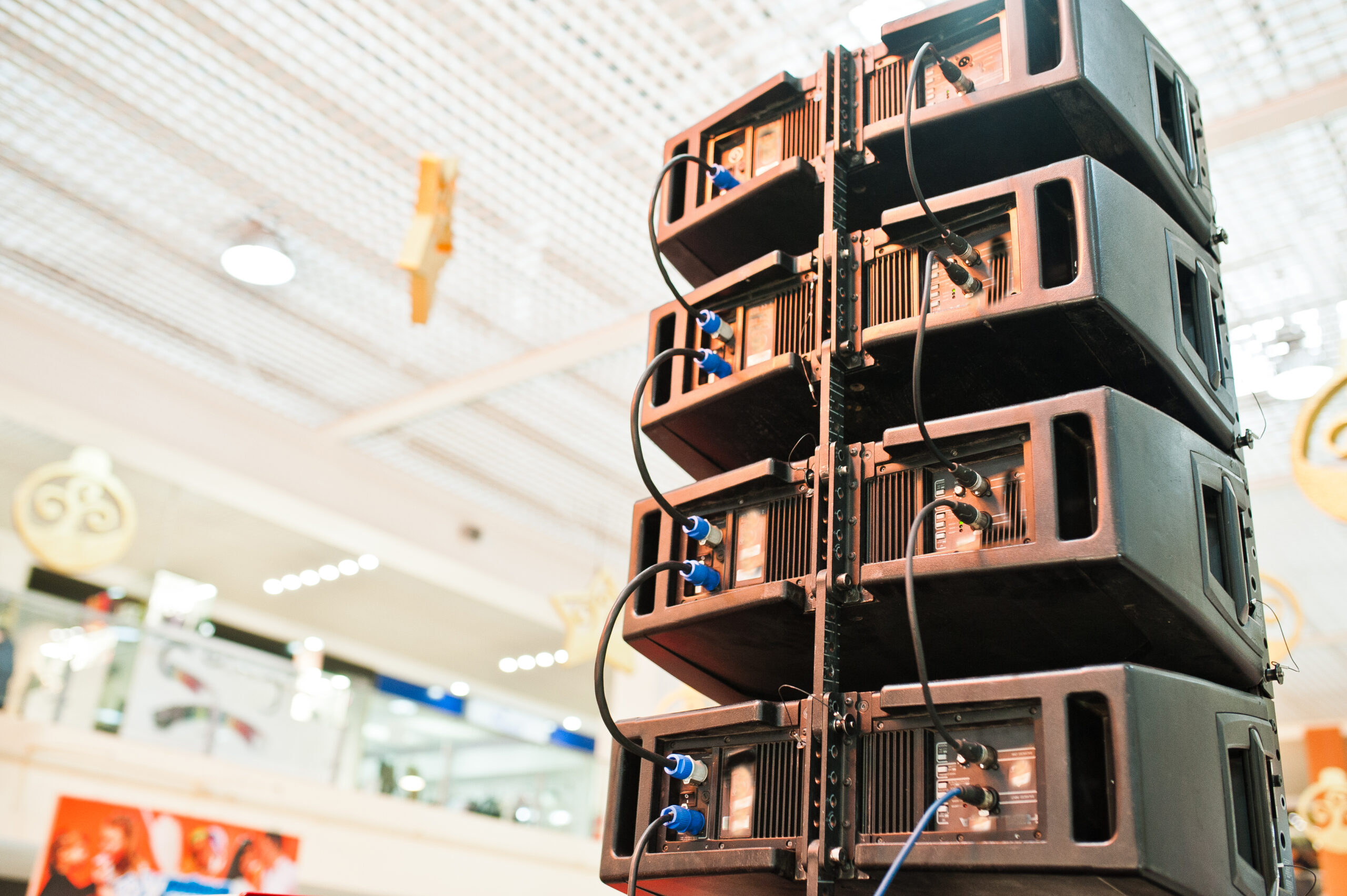
Walking into a historic theatre — a 19th-century opera house, a 1930s art deco concert hall, a medieval great hall pressed into performance service — is an experience defined by architectural atmosphere. These spaces were designed for acoustic experiences that their original architects could never have anticipated: amplified popular music, corporate events with wireless microphones, broadcast productions with complex signal chains. The acoustic challenges posed by historic theatre environments) are among the most demanding in the live sound field, and line array system design) for these spaces requires engineering sophistication that exceeds what most large venues demand.
The Problem With History: Reverberation and Reflection
A Victorian opera house built in 1880 was designed for unamplified orchestral performance. Its reverberation time) — typically 1.8–2.5 seconds at mid frequencies in an empty hall — was calibrated to flatter the natural decay of orchestral instruments. Applied to amplified speech or contemporary music, this reverberation becomes a liability: words blur into each other, bass frequencies create muddy accumulations that obscure harmonic clarity, and the natural room resonances) activated by high SPL amplification produce unpredictable peaks and nulls across the frequency spectrum.
Simultaneously, the ornate plaster surfaces, carved wooden balconies, and complex ceiling geometry of historic interiors create early reflections) — sound bouncing back from surfaces at delay times of 15–40 ms — that interfere constructively and destructively with the direct sound from the PA system. These reflections were acoustically benign in the unamplified era because the original sound source (the stage) was distributed and the reflective returns merely reinforced that distributed source. With a concentrated PA system as the primary source, the same reflections create comb filtering) that the audience hears as a ‘coloured’ or ‘honky’ frequency response in specific seating zones.
Line Array Directivity: The Primary Engineering Tool
The specific value of line array systems) in historic theatre applications is their ability to deliver controlled vertical directivity) — keeping acoustic energy within the audience plane and away from the reflective surfaces above and behind the listening area. A well-specified and optimised line array in a reverberant historic theatre can deliver 4–6 dB improvement in direct-to-reverberant ratio) compared to a conventional loudspeaker system with broader radiation patterns. In a space with a 2-second reverberation time, that improvement represents a qualitative shift in intelligibility that distinguishes a professionally engineered installation from an adequate one.
The L-Acoustics KIVA II) and L-Acoustics SB15M) combination, d&b V8 and V-SUB), and Meyer Sound ULTRA-X40) with 1100-LFC) are among the line array systems most frequently specified for historic theatre applications, chosen for their compact physical dimensions — critical for installations that must preserve sightlines and respect architectural aesthetics — combined with the vertical directivity control required for reverberant environments. Physical size is often a more constraining specification than acoustic performance in these applications: a system that covers 2,000 seats from a position that is architecturally acceptable in a 19th-century interior is worth more to a historic venue than a more powerful system that cannot be installed without visual disruption.
The Integration Challenge: Heritage Constraints
Installing sound reinforcement in a listed or protected historic building involves navigating heritage authority requirements that can impose severe constraints on what modifications are permissible. Drilling into stone or plaster walls, installing permanent rigging infrastructure that penetrates structural elements, or concealing cable runs within protected fabric are all subject to approval processes that can extend to years in some jurisdictions. Productions working with historic venues on temporary installation bases — festival one-offs, single-season installations, or touring productions using the venue for one or two nights — must achieve professional results within even tighter constraints: no permanent fixings, no surface modifications, no impact on the venue’s operational state after strike.
Temporary rigging solutions for these environments — using freestanding ground support systems) from Litec), Global Truss), or ProStage) that apply loads directly to structural floor surfaces rather than walls or ceiling — enable sophisticated line array installations without heritage impact. These solutions require detailed structural engineering calculations to confirm that floor loading is within the building’s capacity — typically 3–5 kN/m² for historic structures — and must include the soft padding and load-spreading bases that prevent surface damage to period floors.
Acoustic Measurement and Correction in Reverberant Spaces
The measurement and correction workflow for historic theatre line arrays must account for the complex interaction between the PA system and the acoustic environment with more care than a contemporary purpose-built venue requires. Smaart-based measurement) in a reverberant hall captures the combination of direct sound, early reflections, and reverberant tail simultaneously — requiring the engineer to extract direct sound impulse response) information from the complex measurement using windowing techniques) that isolate the direct sound before the first room reflection.
FIR filter correction) — available through processors including Lake Controller), Dolby Lake Processor), and XTA DP548) — is particularly valuable in reverberant historic venues because its linear phase characteristics) avoid the group delay distortions introduced by conventional IIR EQ. In a space where the reverberant energy creates significant temporal smearing, maintaining phase coherence in the direct sound path is critical for achieving the intelligibility improvement that the PA investment is designed to deliver.
Notable Deployments: When Engineering Meets History
Historic theatre sound reinforcement has produced some of the most technically creative solutions in the field. The installation of line array systems) at venues including Carnegie Hall) in New York, Royal Albert Hall) in London, and the Sydney Opera House) represent different approaches to the same fundamental challenge, executed at different scales and with different heritage constraints. The Royal Albert Hall’s acoustic modification programme), which combined acoustic diffusers suspended from the ceiling with sophisticated distributed PA design), stands as a model of integrated architectural and acoustic engineering intervention in a protected historic structure.
For touring productions visiting historic venues as part of routing decisions that prioritise iconic locations over acoustic convenience, the ability to deploy and optimise a line array solution) that delivers professional results in a challenging environment is a mark of the highest professional competence. The 100+ historic theatres that host professional productions annually rely on this competence more than any other acoustic environment in the touring world.
